20% Off All-On-4


Dentures vs. Implants in Houston, TX
June 29, 2026
/
If you live in Southside Place and are missing one or more teeth, you have options. Two of the most common are dentures and dental implants. Understanding which preserves your jawbone better is essential for your long-term health. This guide breaks down the honest comparison — cost, function, bone preservation, and quality of life.
When patients ask about dentures vs. implants and which preserves your jawbone better in Southside Place, the answer isn’t always simple. Both solutions restore your smile. But they behave very differently inside your mouth over time. Let’s explore what that means for you.
Why Jawbone Preservation Matters After Tooth Loss
Many patients focus on the visible gap a missing tooth leaves. However, the real problem often starts beneath the gumline. When a tooth root disappears, the jawbone no longer receives stimulation. Without stimulation, the bone begins to shrink — a process called resorption.
Bone loss can happen quickly. Studies show that up to 25% of jawbone width can be lost in the first year alone. Over time, this changes the shape of your face. It also makes future dental treatment more difficult and costly.
This is why the choice between dentures and implants carries serious long-term consequences. It’s not just about replacing the tooth you can see. It’s about preserving the structure that supports your entire face.
How Dentures Affect Your Jawbone Over Time
Traditional dentures sit on top of your gums. They do not interact with the jawbone beneath. This means they offer zero stimulation to the bone.
As bone resorption continues, the shape of your jaw changes. Your dentures gradually become loose and ill-fitting. Most patients need regular relining or full replacements every several years. This adds ongoing cost and inconvenience over time.
There are still reasons people choose dentures. They are more affordable upfront. They do not require surgery. And they can restore basic function and appearance relatively quickly. Here are some key facts about traditional dentures:
- Non-surgical, more accessible option for many patients
- Lower upfront cost compared to implants
- Can be made in a relatively short time
- Require daily removal and cleaning
- Do not stimulate the jawbone, allowing ongoing bone loss
- May become loose or uncomfortable as the jaw changes shape
For patients who are not surgical candidates or need a faster solution, dentures can be a reasonable starting point. But patients should understand the long-term bone loss trade-off before deciding.
Dentures vs. Implants: Which Preserves Your Jawbone Better in Southside Place
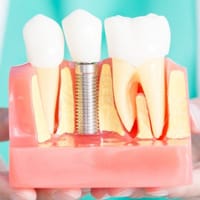
Dental implants are titanium posts placed directly into the jawbone. They act as artificial tooth roots. The bone actually bonds to the implant in a process called osseointegration. This is what makes implants uniquely effective at stopping bone loss.
Once integrated, the implant mimics a natural tooth root. Every time you chew, the implant transfers force into the jaw. This stimulation tells the bone to maintain its density and volume. It is the only tooth replacement option that actively preserves bone.
On top of the implant, a restoration is placed — often a crown. Your dentist may also use an Implant Denture when multiple teeth need replacement. This combines the stability of implants with the coverage of a denture. It’s a powerful middle-ground option for many patients.
The functional benefits of implants are significant. They feel and perform like natural teeth. You can eat, speak, and smile with full confidence. There is no need to remove them at night or use adhesives.
- Stimulate the jawbone, preventing bone resorption
- Function like natural tooth roots
- Stable and secure — no slipping or shifting
- Easy to clean with regular brushing and flossing
- Long-lasting with proper care — often 20+ years
- Preserve facial structure and appearance over time
Cost Comparison: Upfront vs. Long-Term Investment
Cost is often the first question patients raise. Dentures have a lower upfront price. Implants require a greater initial investment. But it’s important to think beyond the first payment.
Traditional dentures require relining, repairs, and eventual replacement. These recurring costs add up significantly over a decade. Implants, on the other hand, are built to last for decades with minimal maintenance. When viewed over a 10- to 20-year period, implants can be more cost-effective.
The health costs of bone loss also deserve consideration. Advanced bone loss may eventually require bone grafting before implants become possible. Preventing that loss early with implants avoids that additional expense. When Southside Place patients compare dentures vs. implants for long-term value, implants often win on durability and total cost of care.
Your treatment plan may also include additional restorations like Dental Crowns to top your implants or protect adjacent teeth. Dr. Shreed Sista and the Dentiq Dentistry Houston team will create a customized plan that fits your specific needs and goals.
Quality of Life: The Real-World Difference
Beyond bone preservation, the day-to-day experience matters enormously. Implant patients consistently report higher satisfaction than denture patients. They eat a wider variety of foods without worry. They speak more naturally and feel more confident in social situations.
Denture wearers often avoid hard or sticky foods. Many feel self-conscious about their prosthetic slipping. Over time, the changing jaw shape can affect how they look and how they feel about themselves. These quality-of-life factors are just as important as clinical outcomes.
For Southside Place patients who are good surgical candidates, implants offer a transformation — not just a replacement. They allow people to live, eat, and smile as naturally as possible. That freedom has real value.
Conclusion: Making the Right Choice for Your Smile
Choosing between dentures and implants is a deeply personal decision. It depends on your health history, your goals, and your timeline. What matters most is that you have all the facts before deciding. Bone preservation, long-term cost, daily function, and quality of life all point toward implants as the superior long-term solution for most patients.
Dr. Shreed Sista at Dentiq Dentistry Houston is ready to help you navigate this decision with compassion and expertise. Our team serves Southside Place and surrounding Houston communities. We will walk you through every option honestly so you can choose what’s right for you. Book Now to schedule your appointment with our team.
Frequently Asked Questions
Do dentures cause jawbone loss?
Yes. Traditional dentures rest on the gums and do not stimulate the jawbone beneath. Without that stimulation, the bone gradually shrinks over time. This is called bone resorption and it can change your facial shape and make dentures fit poorly.
How do dental implants preserve the jawbone?
Implants are placed directly into the jawbone, acting like artificial tooth roots. The bone bonds to the implant through a process called osseointegration. Every time you chew, the implant stimulates the bone and prevents it from deteriorating.
Are dental implants worth the higher upfront cost?
For most patients, yes. Implants are designed to last 20 or more years with proper care. Dentures require relining and replacement over time. When you factor in long-term costs and the health benefits of bone preservation, implants are often the more cost-effective choice overall.
What is an Implant Denture and how is it different from regular dentures?
An Implant Denture combines the coverage of a traditional denture with the stability of implants. Small implants anchor the denture in place, reducing slippage and providing some bone stimulation. It’s a good option for patients replacing multiple teeth who want more security than a traditional denture provides.
Am I a good candidate for dental implants in Southside Place?
Most healthy adults with adequate jawbone density are candidates for implants. A thorough evaluation by Dr. Shreed Sista at Dentiq Dentistry Houston will determine your eligibility. Factors like overall health, bone volume, and gum condition all play a role in the assessment.
Share this Post