20% Off All-On-4

Dental Implants vs Dentures: Which Is Right for You? (Houston 2026 Guide)
March 12, 2026
/
If you’re missing teeth and researching your options, you’ve probably found yourself comparing dental implants and dentures. Both can restore your smile, but they work very differently and what’s right for one person may not be the best choice for another.
This guide breaks down the real differences between implants and dentures, including costs in Houston, what each option involves, and how to decide which makes sense for your situation.
Implants vs Dentures: A Quick Comparison
Before diving into details, here’s what you need to know at a glance:
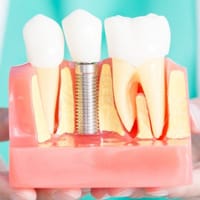
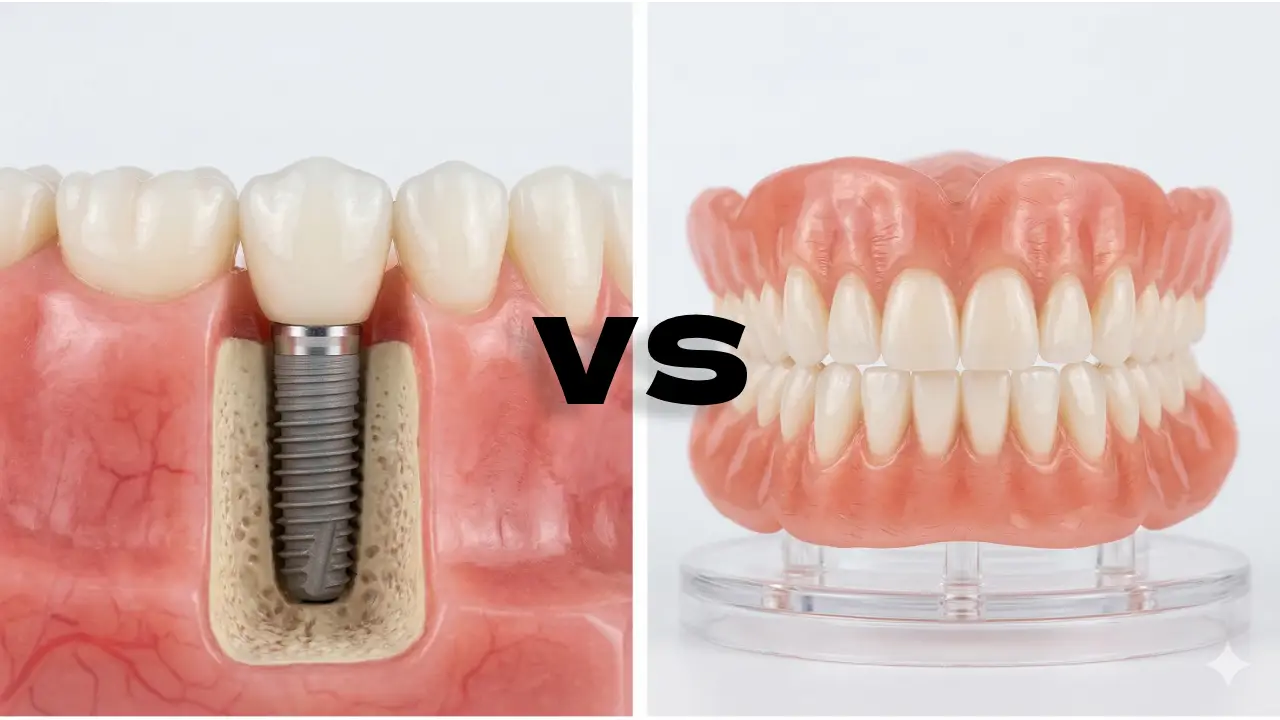
Dental implants are titanium posts surgically placed into your jawbone. They act as artificial tooth roots and support a crown, bridge, or full arch of teeth. They’re permanent, don’t slip, and function like natural teeth.
Dentures are removable prosthetics that sit on top of your gums. They can replace a full arch (complete dentures) or just a few missing teeth (partial dentures). They’re less invasive and more affordable upfront.
| Factor | Dental Implants | Dentures |
|---|---|---|
| Longevity | 20-25+ years | 5-10 years |
| Upfront Cost | Higher | Lower |
| Maintenance | Brush like natural teeth | Daily removal and cleaning |
| Bone Health | Preserves jawbone | Bone loss continues |
| Comfort | Fixed, no slipping | May require adhesive |
| Surgery Required | Yes | No |
When Dentures Make More Sense
Dentures aren’t outdated, they’re still a solid option for many patients, especially in these situations:
Budget is a primary concern. If cost is a deciding factor, dentures require significantly less upfront investment. A full set of dentures in Houston typically costs $1,000 to $3,000, while implants can run $3,000 to $5,000 per tooth.
You need to replace many teeth quickly. Dentures can be ready in weeks, while implants require months of healing between surgery and final restoration.
You’re not a candidate for surgery. Some health conditions or medications make implant surgery risky. Dentures work for almost everyone.
You have significant bone loss. Implants require sufficient jawbone to anchor into. If you’ve had missing teeth for years and have experienced bone loss, you may need bone grafting before implants—or dentures may be simpler.
Modern dentures have come a long way. Flexible partial dentures are more comfortable than older designs, and digital dentures offer better fit and aesthetics than ever before.
When Implants Are Worth the Investment
Dental implants cost more upfront, but for many patients, they pay off in the long run:
You want a permanent solution. Implants don’t need to be removed, adjusted, or replaced every few years. With proper care, they can last 20-25 years or longer—often a lifetime.
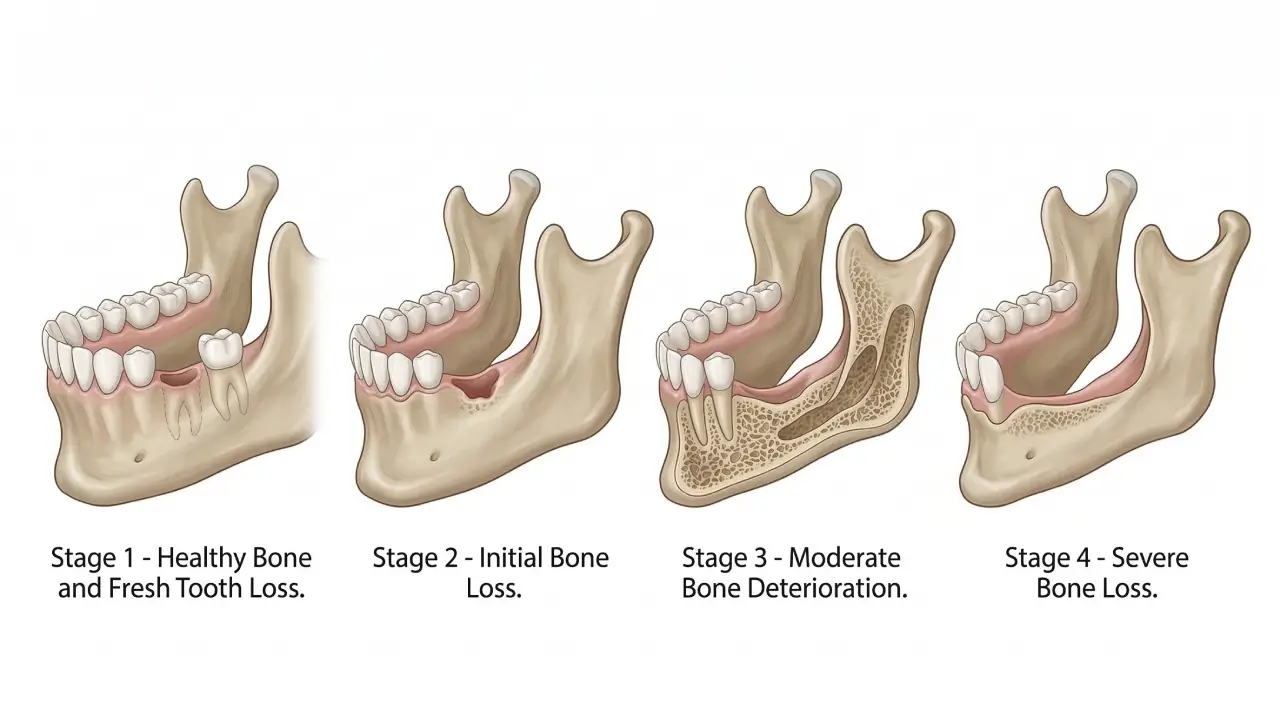
You’re concerned about bone loss. This is the biggest functional difference between implants and dentures. When you lose a tooth, the jawbone in that area starts to deteriorate because it’s no longer stimulated by chewing forces. Implants act like natural tooth roots and maintain that stimulation, preserving your bone structure. Dentures sit on top of the gums and do nothing to prevent bone loss, which is why long-term denture wearers often develop a “sunken” facial appearance.
Comfort and convenience matter to you. Implants don’t slip, don’t require adhesive, and don’t need to be removed for cleaning. You brush and floss them like natural teeth.
You want to eat without restrictions. Dentures can make it difficult to eat certain foods—corn on the cob, apples, steak. Implants restore nearly 100% of your natural chewing ability.
The Middle Ground: Implant-Supported Dentures
Can’t decide between implants and dentures? There’s a hybrid option that combines benefits of both.
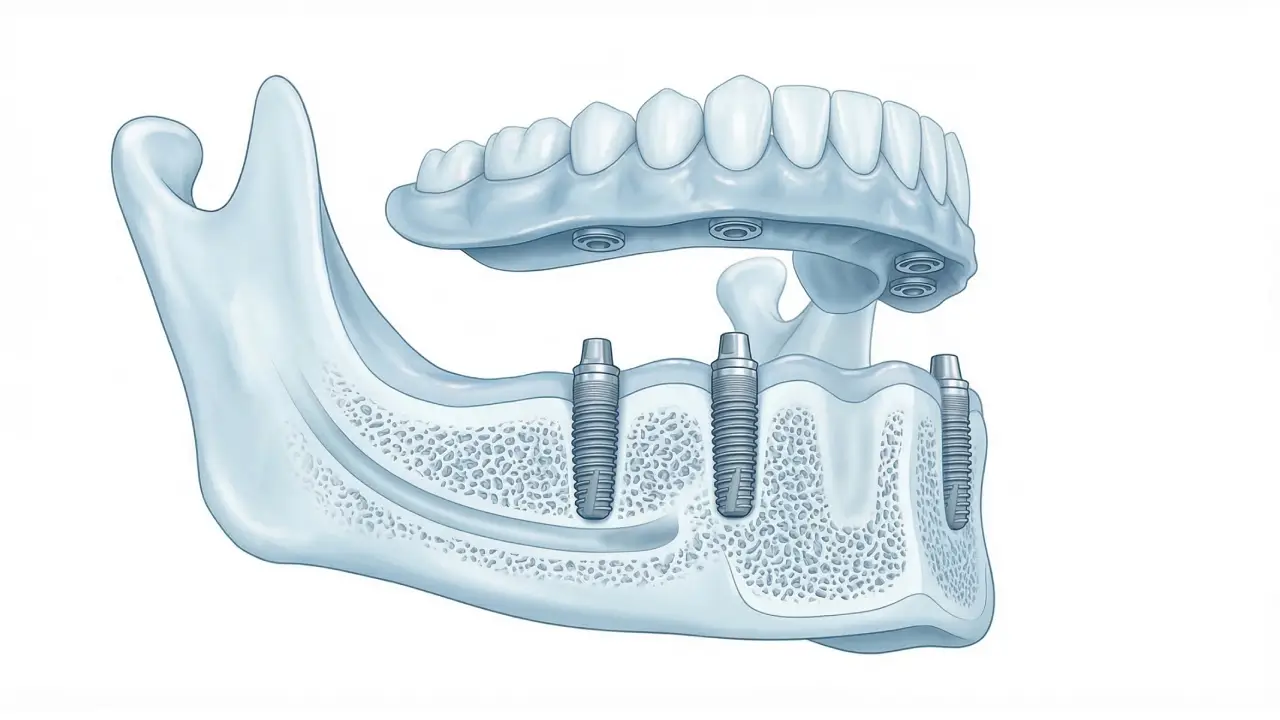
Implant-supported dentures (also called overdentures or snap-in dentures) use 2-4 implants to anchor a removable denture. The denture snaps onto the implants for stability but can still be removed for cleaning.
Why consider this option:
- More stable than traditional dentures—no slipping or adhesive needed
- Less expensive than full-mouth implants (fewer implants required)
- Helps slow bone loss (the implants stimulate the jawbone)
- Good option if you’re not ready to commit to fixed implants
In Houston, implant-supported dentures typically cost $5,000 to $15,000 depending on the number of implants and type of denture.
If you’re dealing with significant bone loss, this can still work. Dentiq offers implant-supported dentures specifically designed for patients with bone loss, using strategic implant placement to maximize stability with the bone you have.
What About All-on-4?
You may have heard of “All-on-4” or “full arch dental implants.” This is a specific technique that uses just 4 implants to support a full arch of fixed (non-removable) teeth.
All-on-4 is different from implant-supported dentures because the teeth are permanently attached—you don’t remove them. It’s essentially a full mouth of implant teeth without needing an implant for every single tooth.
This option is popular for patients who want the benefits of implants but find the cost of individual implants for every missing tooth prohibitive.
What If I Have Bone Loss?
Bone loss is one of the most common concerns patients have when considering implants. Here’s what you should know:
Bone loss doesn’t automatically disqualify you from implants. Modern techniques like bone grafting can rebuild jawbone to support implants. The process adds a few months to your treatment timeline but makes implants possible for many patients who wouldn’t have been candidates years ago.
Some implant techniques require less bone. All-on-4, for example, uses angled implants that maximize contact with available bone. Mini dental implants are another option for patients with moderate bone loss.
Waiting makes bone loss worse. The longer you go without teeth (or with traditional dentures), the more bone you lose. If you’re considering implants eventually, starting sooner gives you more bone to work with.
For seniors or patients with bone loss concerns, a bone grafting consultation can determine what’s possible and what your options are.
Cost Comparison in Houston
Let’s talk real numbers. Here’s what you can expect to pay in Houston:
Traditional Dentures
- Full set (upper and lower): $1,000 – $3,000
- Partial dentures: $500 – $1,500
- Need replacement every 5-10 years
Dental Implants
- Single tooth implant: $3,000 – $5,000
- Full mouth implants (per arch): $15,000 – $30,000
- Lasts 20-25+ years with proper care
Implant-Supported Dentures
- Per arch: $5,000 – $15,000
- Good balance of cost and stability
All-on-4 Full Arch
- Per arch: $15,000 – $25,000
- Fixed, non-removable teeth
When comparing costs, consider the long-term picture. Dentures that cost $2,000 every 7 years add up over 20-30 years. A single investment in implants, while higher upfront, may cost less over your lifetime—and you avoid the ongoing hassle of denture maintenance, adhesives, and adjustments.
Financing options: Most dental practices, including Dentiq, offer payment plans that make implants more accessible. Many patients are surprised to find that monthly payments for implants aren’t much more than what they’d spend on denture supplies and replacements over time.
How to Decide: Questions to Ask Yourself
Still unsure which option is right for you? Consider these questions:
- What’s your budget—short-term and long-term? Can you invest more now to save money and hassle later, or do you need the most affordable option right now?
- How important is convenience? Are you okay with removing and cleaning dentures daily, or do you want teeth you can treat like natural ones?
- Are you concerned about bone loss? If preserving your facial structure matters to you, implants are the only option that actively prevents bone deterioration.
- What’s your overall health? Some conditions affect healing and may make implant surgery riskier. Your dentist can help you evaluate this.
- How many teeth are you replacing? For one or two teeth, implants often make the most sense. For a full mouth, dentures or implant-supported options may be more practical.
Next Steps
The best way to know which option is right for you is to get a professional evaluation. Your jawbone density, gum health, overall health, and personal preferences all factor into the recommendation.
At Dentiq in Houston, we offer consultations to help you understand your options. We’ll take imaging of your jaw, discuss your goals and concerns, and give you a clear picture of what each option would involve—including realistic cost estimates.
Whether you’re leaning toward implants, dentures, or something in between, the goal is the same: restoring your smile and your confidence in a way that works for your life.
Share this Post